
History
Why It Took Carmel-by-the-Sea 110 Years to Get Street Addresses
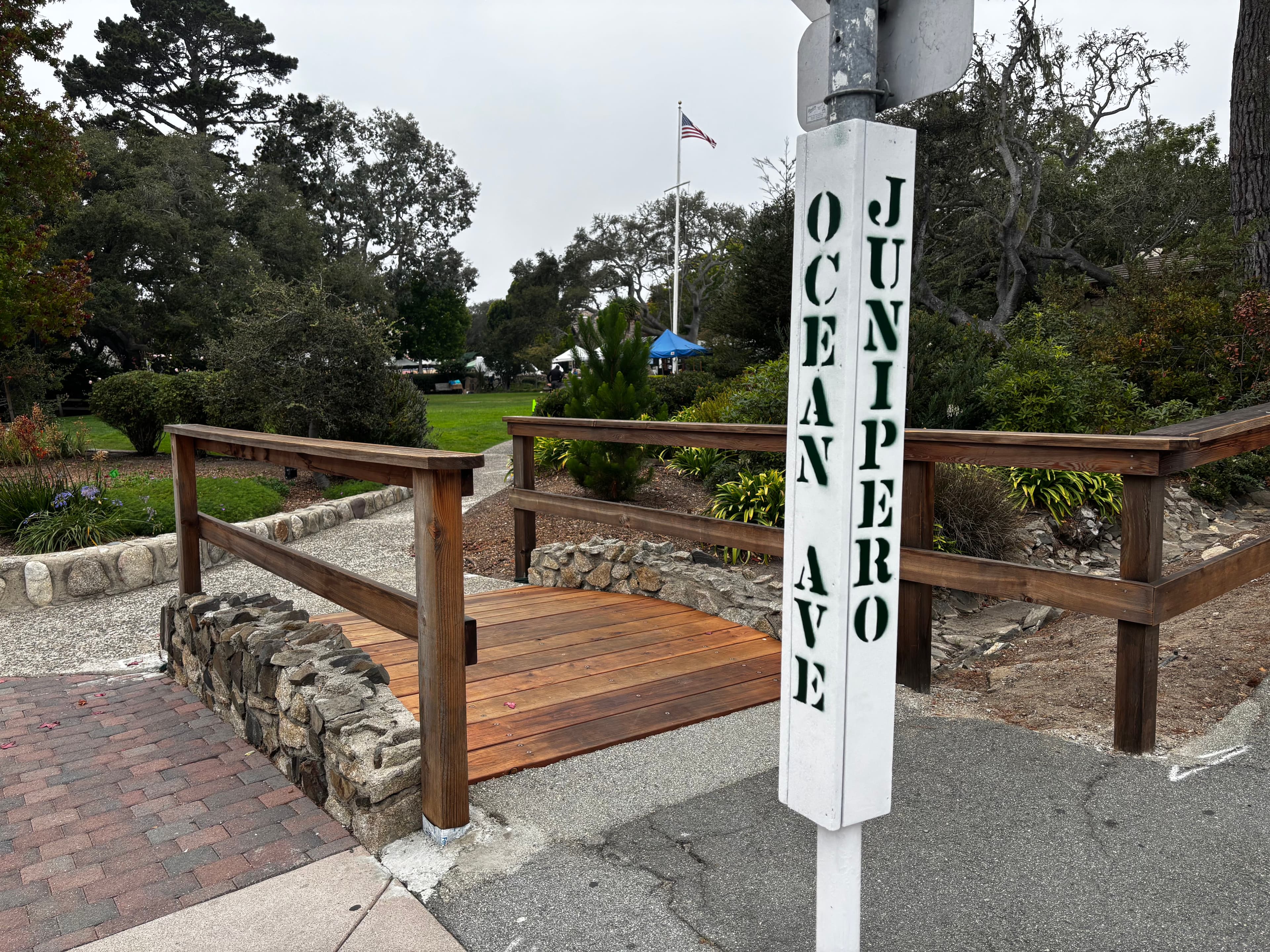
Last post was about what changed in Carmel-by-the-Sea this year: the town got real street addresses for the first time in its history, mostly so ambulances can find you. This one's about why it took 110 years to get there, and honestly, it's where the town's whole personality shows up.
A town built to be different on purpose
Carmel wasn't founded to be a normal town. Back in 1902, two guys named James Devendorf and Frank Powers bought up the land and started the Carmel Development Company. They weren't trying to build a subdivision and flip lots for profit. They wanted artists and writers, people of "small means" who actually cared about the place, not developers looking to cash out. They sold lots on a pay-when-you-can basis to get the right kind of people in. Then in 1906 the San Francisco earthquake hit, and a wave of displaced artists and writers ended up settling in Carmel too. That's basically where the personality of the town comes from. It wasn't an accident. It was built to be different on purpose, and by the time it officially incorporated in 1916, that identity was already locked in.
So when the idea of numbering houses came up later on, people didn't just find it annoying. To a lot of them it felt like it went against the whole reason they'd moved there in the first place.
The first fight: 1925 and 1926
The first real attempt was in 1925. The postmaster asked for houses to be numbered. Citizens responded with a resolution against it. The trustees went ahead anyway and ordered a numbering map prepared. In 1926 they actually passed an ordinance, unanimously, requiring house numbers.
And then they just never enforced it. For fourteen years it sat on the books doing nothing, until they formally repealed it in 1940.
The secession threat: 1953
In 1953, the state of California considered a law that would have required every town to number its houses. Carmel's response was to threaten to secede from the state. One source I found ties this specifically to a gas tax bill, but I couldn't independently confirm that detail beyond the one article referencing it, so I'd treat that specific mechanism as unconfirmed. What's not in question is that the secession threat happened and the state backed off.
The Devendorf story I couldn't confirm
There's a story that keeps getting passed around, that Devendorf himself, the guy who founded the town, personally didn't want addresses. The only place I found this claim was his great-grandson talking about it in a locally produced history video. I couldn't find anything else to confirm it. Worth remembering that a family story and a documented fact aren't always the same thing, even when they're both probably pointing at something true.
The 2000 offer and the 2002 ban that maybe wasn't
By 2000, the USPS reportedly offered Carmel free home delivery if the town would just agree to numbers. According to the timeline I found, this was announced at a packed City Hall meeting. It apparently went nowhere, since the town clearly still had no delivery over twenty years later, but I couldn't track down a primary source that explains exactly why it fell through.
Then in 2002, a councilmember actually tried to pass an ordinance specifically banning street addresses, when the mail delivery question came up again. What happened to that proposal, whether it passed or just faded out, isn't clear from what I found.
Even the city's own history doesn't fully agree with itself
Here's a small thing I ran into while looking into this that I still haven't sorted out. Carmel's own city staff report puts the town's first post office at 1904. But a USPS spokesperson told the LA Times in 2024 that the postal service had actually been serving the town since 1889, which is earlier than the Carmel Development Company even existed yet. Neither source explains that gap, so I'm just leaving it here as an open question instead of pretending I've got it figured out.
Why people held on so tight
This didn't stick around for a hundred years just because people were being stubborn about it. The post office actually was the social hub of town, and for a lot of longtime residents, it still is. Hans Lehmann is a good example of that: he's in his 90s, has lived in Carmel since 1939, and still picks up his mail at the post office in person because it's part of what keeps him connected to people in town. A 1945 account of Carmel describes the post office as basically the social center of the place, the one spot you'd run into people multiple times a day.
Houses in Carmel don't have numbers, but almost all of them have names. Signs out front with things like "Somewhere," "Almost Heaven," "Thisisit" next door to "Thisisnt." People fought to keep this custom even with the new addressing system rolling out, and the city built that into the plan. Residents can keep naming their houses. They just also have a number attached now.
There's a real privacy angle too. Some residents genuinely liked not being easy to find. One woman told the LA Times outright that she comes to Carmel specifically because she doesn't want to be found, no address, no phone, spotty internet on purpose.
But the inconveniences piled up over the years. A councilmember had Christmas pears delivered that rotted on an empty vacation home's porch for two weeks because the driver couldn't find the right house. A veteran couldn't get his VA health coverage sorted because a clerk looked him up on Google Maps and asked if he was homeless. People spent hours on the phone with banks trying to prove their house was real. That's the tension that finally broke the stalemate, the identity the town built itself around running headfirst into how the rest of the world actually operates now.
Where it landed
Carmel finally has addresses, but it didn't have to give up what made it Carmel to get them. That's the part I keep coming back to. The town spent over a hundred years trying to stay different on purpose while also just trying to function in the modern world, and it took this long to land on a version of both that actually worked. If you ask me, that's a better story than the addresses themselves.
Sources
- City of Carmel-by-the-Sea staff memo, Sept. 16, 2022
- Los Angeles Times
- New York Times
- Carmel Pine Cone
- Daisy Bostick, Carmel: Today and Yesterday (1945)
- Carmel Residents Association historical timeline